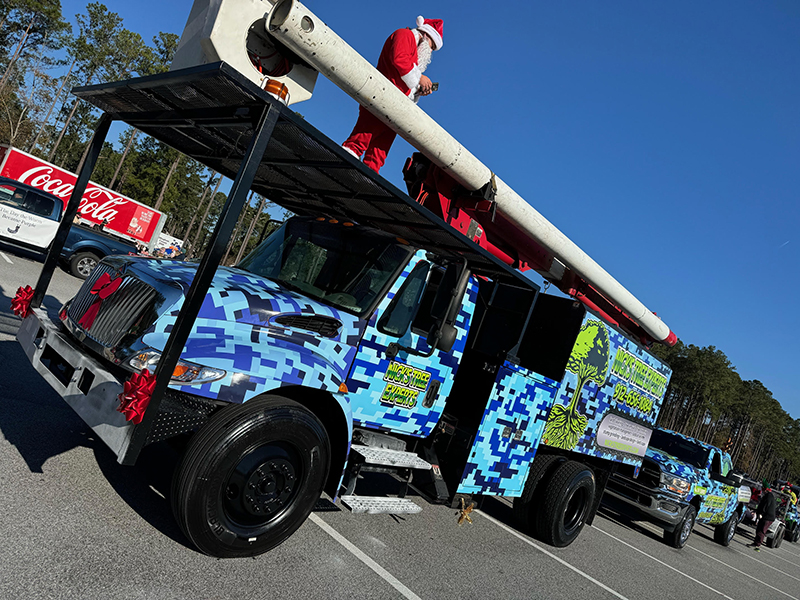

A pine snapped at the base during a summer thunderstorm can drop onto a service line in under a second, and once it does, the situation stops being a landscaping problem and becomes an electrical hazard. The wood is now a conductor, the ground around it may be energized, and the branches leaning against the wire are holding tension that can release without warning. Crews at Nicks Tree Experts treat this exact scenario dozens of times a year across Effingham County, and the response follows a disciplined sequence rather than a rush to cut. This article walks through what actually happens on those calls, why the order of operations matters, and what you should and should not do while you wait for help.
Springfield sees its share of severe weather, from the straight line winds that roll in off the Ogeechee River corridor to the saturated soil that follows days of rain. Those conditions loosen root plates and load canopies with weight until something gives. When the something that gives lands on a power line, the safe path forward is narrower than most people expect.
First Priority Is Confirming the Line Is De Energized
No reputable crew touches a tree that is contacting a power line until the utility confirms the line is dead. This is not caution for its own sake. Distribution lines in residential neighborhoods commonly carry 7,200 volts, and a tree limb bridging that line to the ground can push current through anyone standing nearby. Even a service drop, the lower voltage wire running from the pole to your house, carries enough to be fatal.
The first calls a crew makes are to the electric utility and, when needed, to emergency dispatch. The utility either cuts power to that segment, isolates the circuit, or sends a bucket truck to physically separate the conductor from the tree. Only after the line is verified de energized, and often physically grounded by the utility, does the tree work begin. A crew that skips this step is gambling with lives, and it is one of the clearest signs of an outfit that should not be on your property.
How the Crew Reads the Damage Before a Saw Comes Out
Assessment is the part homeowners rarely see, and it is where experience separates a clean removal from a disaster. A leaning storm damaged tree is a puzzle of stored energy. Some limbs are in compression, pushing against each other. Others are in tension, stretched and waiting to spring. Cut the wrong fiber first and a bent trunk can whip, a hung limb can drop, or the whole leaning mass can shift toward the very line it just came off.
The team looks at the lean angle, the root plate, whether the trunk is cracked or fully snapped, and how the canopy is resting against the wire. They identify the hinge points and plan cuts that release tension gradually. This planning stage is where our certified arborist services earn their value, because a trained arborist reads load and fiber the way a mechanic reads an engine, spotting the failure before it happens.
A tree can look settled and still be loaded like a spring. Crews watch for specific tells that the wood has not finished moving.
- A trunk that is bent into a bow rather than cleanly broken
- Roots lifting on one side of the base or soil heaving in a crescent
- Limbs pinned against the wire or the roofline holding weight
- Cracks that run up the stem or open and close as the wind shifts
- A canopy resting on a structure that is bearing part of the load
Setting Up a Safe Work Zone
Before cutting starts, the crew establishes control of the area. They rope off a drop zone wide enough to account for a limb that swings the wrong way. They position rigging points, set up a bucket truck or climbing lines, and place spotters where they can see the whole tree without standing under it. On a property with a house close to the line, they also protect the roof, gutters, and any parked vehicles from falling debris.
Weather is part of this calculus too. Wet bark is slick, and a canopy heavy with rain moves differently than a dry one. If wind is still gusting, the team may wait for a lull rather than fight a moving target. This measured approach is a hallmark of professional tree removal in Springfield, where local crews know how quickly a Georgia storm can circle back.
The Rigging and Cutting Sequence
Once the line is confirmed dead and the zone is secured, the actual removal is a controlled dismantle rather than a single felling cut. Dropping a leaning tree whole toward or across a line is almost never the plan. Instead the crew takes it apart in pieces, working from the weight that threatens the line first.
Rigging ropes and pulleys let the team lower heavy sections instead of letting them fall. A climber or bucket operator makes relief cuts to release tension in a controlled order, then removes limbs and trunk segments one at a time. Each cut is chosen so the piece moves away from the wire, the structure, and the crew. When a bent trunk finally straightens as weight comes off, it does so slowly because the load was bled out deliberately, not all at once.
The utility often stays involved through this phase, especially if the service drop to the house was pulled loose or the meter base was damaged. Coordinating with the power company means the line stays de energized until the last piece near it is clear, then power can be safely restored.
Why This Work Is Not a Do It Yourself Job
The urge to grab a chainsaw and clear the mess is understandable, especially with a tree lying across your driveway or half your yard fenced off. It is also how people are killed and injured every storm season. Backfeed from a generator can re energize a line the utility thinks is dead. A ladder against an energized limb becomes a lightning rod. A kickback from a saw on a tensioned trunk can throw a blade into a leg in an instant.
There is also the matter of what happens after the immediate danger is gone. A tree that failed in a storm often leaves neighbors with weakened, half stripped trees that will fail in the next event. Thinning weight and correcting structure through expert tree trimming services reduces the odds of a repeat, particularly for the water oaks and pines that dominate yards around Springfield and tend to shed limbs under load.
Cleanup, Debris, and What Gets Left Behind
After the tree is off the line and down, the job is only partly done. Trunk sections get bucked into manageable lengths, brush is chipped or hauled, and the crew clears the drop zone so you can use your property again. If the trunk was fully uprooted, there may be a root ball and a crater to address, and stump grinding is a separate decision depending on how close it sits to structures or where you want to replant.
A thorough crew also documents the damage for your records. Photos of the tree on the line, the damaged service drop, and any structural harm to the house help when you file an insurance claim. Storm tree removal that involves utilities frequently qualifies for coverage, and clear documentation speeds that process along.
What to Do While You Wait for the Crew
Your actions in the first minutes matter. The single most important rule is distance. Treat every downed or contacted line as live, and keep at least thirty five feet away from the tree and any wire touching it. Warn family members and neighbors, especially children, to stay clear.
- Keep everyone far back from the tree and any wire it touches
- Do not step in standing water near the contact point
- Report the downed line to your electric utility right away
- Do not run a generator connected to your home wiring without a transfer switch
- Move vehicles only if you can do so without approaching the line
- Photograph the scene from a safe distance for insurance
If a line is arcing, sparking, or has started a fire, call 911 before anything else. Utilities prioritize energized lines down in occupied areas, and the sooner they know, the sooner the segment gets isolated.
Planning Ahead So the Next Storm Does Less Damage
The best time to deal with a tree over a power line is before it fails. Trees with heavy limbs overhanging the service drop, dead wood in the crown, or a lean toward the wire are candidates for proactive work. An inspection before hurricane season can flag the trees most likely to come down and let you address them on your schedule rather than in the dark during a storm.
When you are ready to have a leaning or storm damaged tree evaluated, you can book a free quote and get a clear read on the risk and the cost before conditions force the decision for you.
Storms will keep rolling through Effingham County, and pines will keep leaning toward the lines that power our homes. Knowing how a trained crew handles that hazard, and where your responsibility ends and theirs begins, keeps a bad night from becoming a tragic one.
Frequently Asked Questions
Can a tree removal company cut a tree off a power line, or does the utility have to do it?
The utility must confirm the line is de energized and often physically separates the conductor first. Once the line is verified dead, a qualified tree crew handles the removal, frequently coordinating with the power company throughout the job.
Is it safe to walk near a tree leaning on a power line if the power is out?
No. An outage does not mean the specific line is dead, and backfeed from a generator can re energize it. Stay at least thirty five feet away and treat every wire as live until the utility says otherwise.
Will my insurance cover a storm tree that fell on the power line?
Coverage often applies when a storm tree damages your home or service drop, but it depends on your policy. Photograph the scene and the damage from a safe distance so you have clear documentation for the claim.
How long does it take to remove a tree off a power line?
Timing depends on the utility response and the complexity of the tree. Waiting for the line to be de energized can take hours during a widespread outage, while the removal itself usually runs a few hours once crews can safely begin.
How can I keep this from happening again?
Have trees near your service line inspected before storm season. Removing dead wood, thinning heavy limbs, and taking out trees leaning toward wires greatly reduces the chance of a repeat failure.